Epistemic Justice
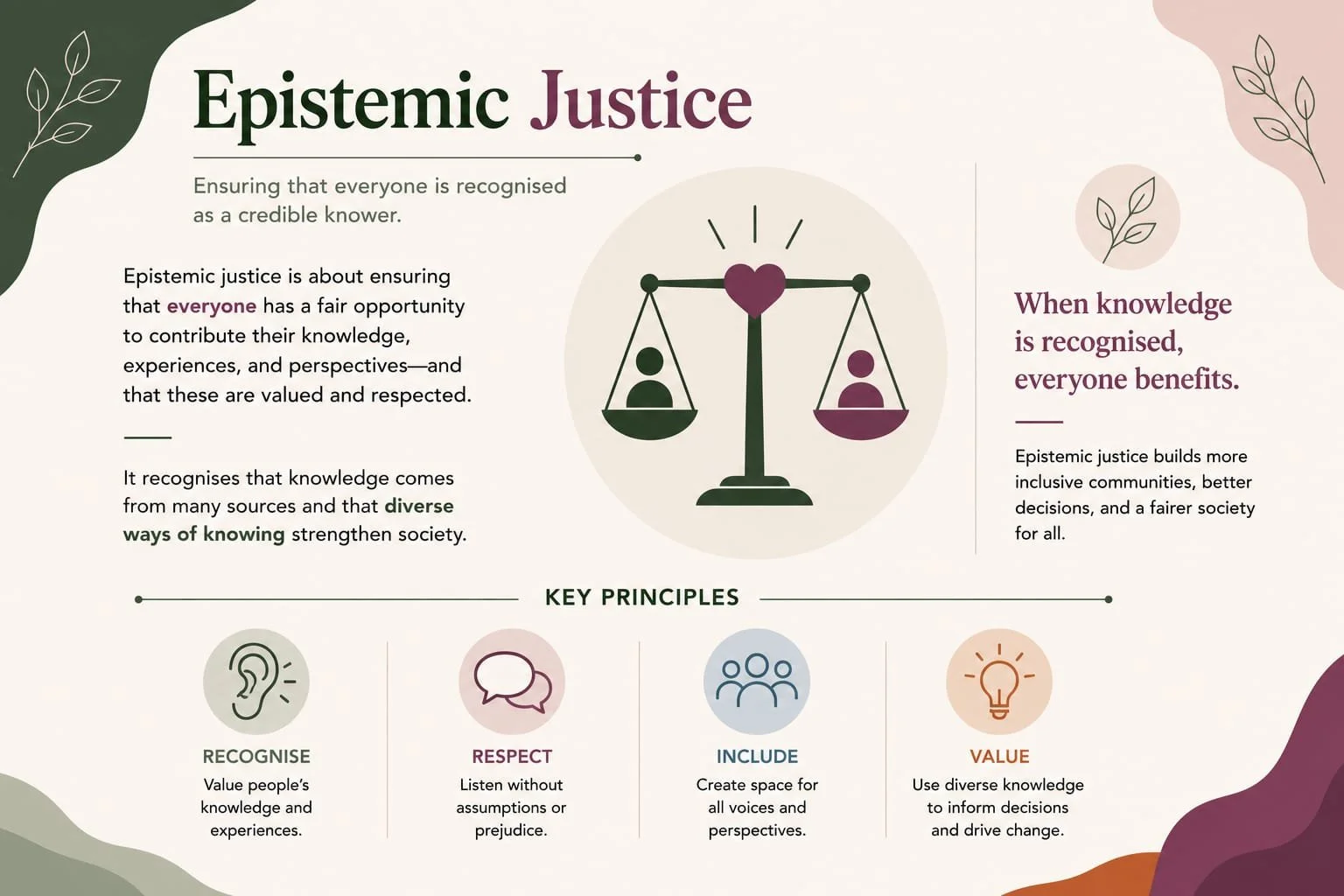
This article introduces the concept of epistemic justice: the principle that everyone should have a fair opportunity to contribute, share, and have their knowledge recognised without prejudice or unfair bias.
The concept underpins much of my academic work because inclusive research and practice depend not only on who is included, but also on whose knowledge is recognised as credible and influential. By exploring how epistemic injustice operates across society, this article provides a foundation for understanding why my work focuses on creating research, organisations, and systems that value diverse ways of knowing and enable people to contribute meaningfully.
As awareness of neurodiversity has grown, conversations have increasingly focused on inclusion, accessibility, and belonging. However, another important concept that helps us understand why neurodivergent people can still experience exclusion, even when they are present in society, is epistemic justice.
At its core, epistemic justice is about ensuring that people are recognised as credible knowers whose experiences, insights, and ways of understanding the world are valued.
What is epistemic justice?
The philosopher Miranda Fricker (2007) introduced the concept of epistemic injustice to describe situations where people are unfairly disadvantaged in their role as knowers. Rather than simply being excluded from opportunities, people may also be excluded from contributing their knowledge, experiences, and perspectives.
Epistemic justice recognises that knowledge comes from many sources, including lived experience, professional expertise, research evidence, cultural understanding, and everyday interactions.
When some forms of knowledge are consistently valued more highly than others, important perspectives can be overlooked or dismissed.
For many neurodivergent people, these issues can arise across all areas of life. Whether accessing healthcare, attending school, applying for work, navigating social relationships, participating in research, or influencing policy, assumptions about communication, credibility, and expertise can shape whose knowledge is heard, believed, and acted upon.
Testimonial injustice & Credibility
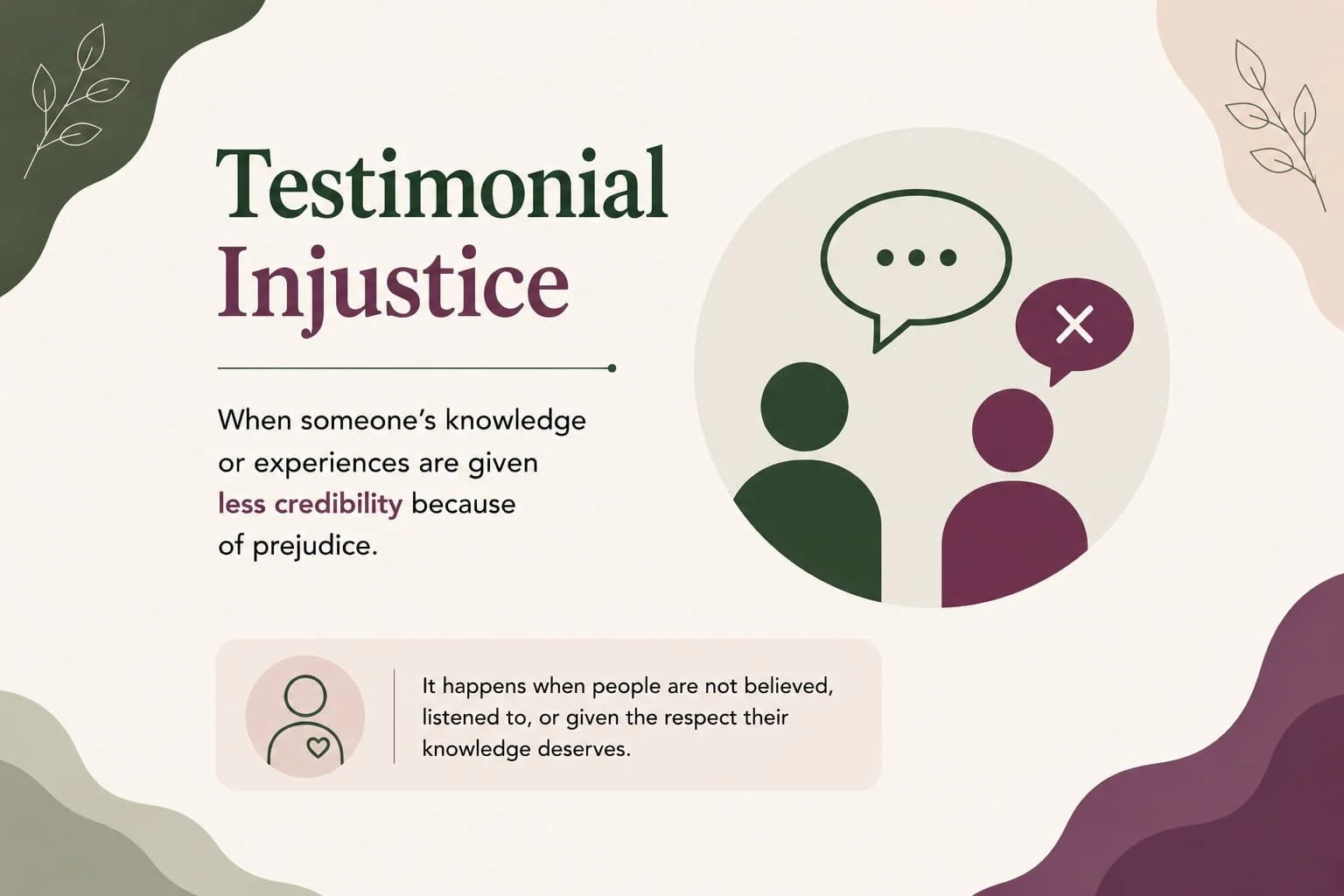
Testimonial injustice occurs when someone's knowledge or experiences are given less credibility because of prejudice.
For neurodivergent people, this may occur when:
An autistic person's description of sensory experiences is dismissed as an exaggeration
An ADHD adult's account of executive functioning challenges is interpreted as laziness rather than a genuine difficulty;
A neurodivergent employee’s concerns about workplace barriers are minimised
A child's communication is overlooked because they communicate differently
In each case, the issue is not the quality of the person's knowledge but the assumptions others make about their credibility.
Hermeneutical Injustice & Understanding
Hermeneutical injustice occurs when people lack the shared concepts or language needed to understand and communicate their experiences.
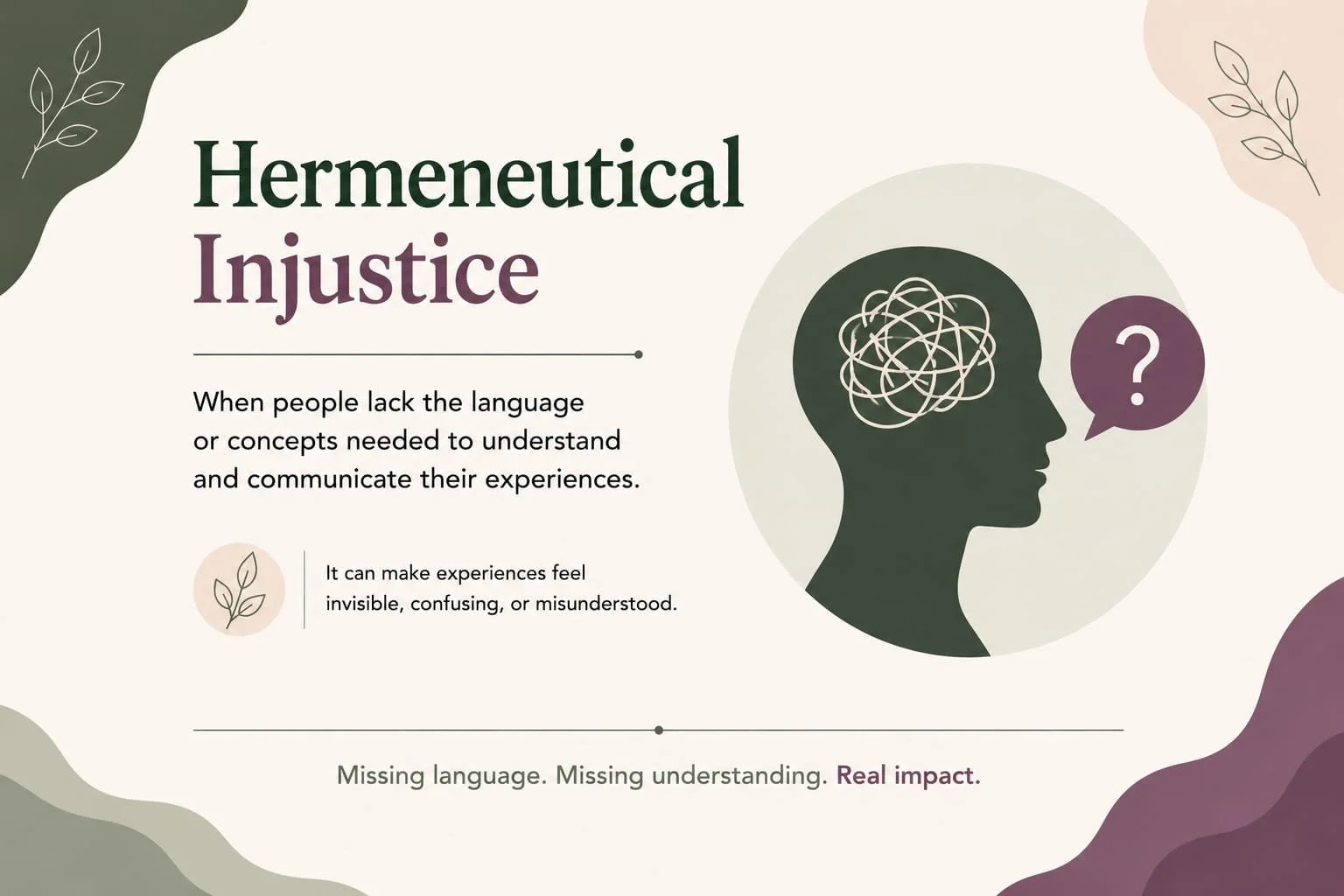
Many neurodivergent adults describe spending years knowing they experienced the world differently but lacking the words to explain why. Concepts such as masking, autistic burnout, rejection-sensitive dysphoria, monotropism, and sensory overload have helped many people make sense of experiences that were previously confusing, invisible, or misunderstood.
Hermeneutical injustice also affects wider society. When professionals, employers, educators, families, or communities lack these concepts, they may unintentionally misunderstand neurodivergent experiences or interpret them through inaccurate or deficit-based frameworks.
Epistemic injustice & Inclusion
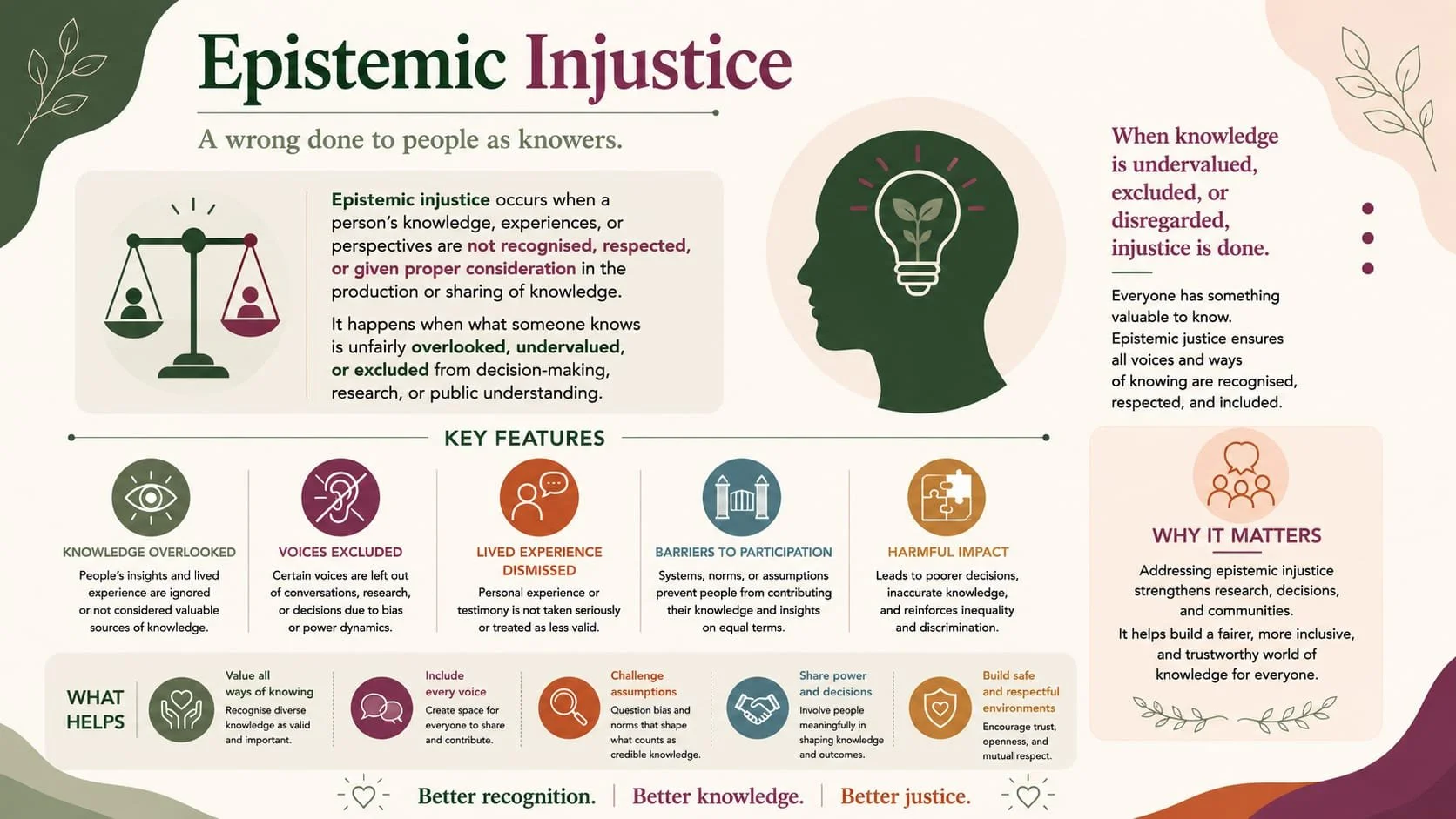
Epistemic injustice is the broader concept that encompasses both testimonial and hermeneutical injustice to promote a fairer, more inclusive society.
It reminds us that injustice can occur when:
People are not believed
Experiences cannot be adequately understood
Certain ways of knowing are overlooked
Social institutions privilege some forms of knowledge while marginalising others
These injustices are not confined to any single setting. They can occur throughout everyday life—in healthcare, education, employment, social care, the justice system, public services, research, policy, and interpersonal relationships.
Moving towards epistemic justice
Promoting epistemic justice does not mean treating every opinion as equally accurate. It means ensuring everyone has a fair opportunity to contribute their knowledge and that different forms of expertise are recognised and valued. Working towards epistemic justice involves listening with curiosity rather than making assumptions, valuing lived experience alongside professional and academic expertise, respecting different communication styles, using language that reflects diverse experiences, and asking whose voices are included—and whose are missing.
For neurodivergent people, this might mean allowing extra time to process information before expecting a response, accepting written communication as equally valid to verbal discussion, avoiding assumptions based on diagnostic labels, and recognising that differences in eye contact, body language, or communication style do not reflect a person's insight, knowledge, or credibility. It also means involving neurodivergent people in decisions that affect them and being open to different ways of understanding problems and developing solutions.
Ultimately, epistemic justice benefits everyone. When we value diverse ways of knowing, we make better decisions, deepen our understanding, and create more inclusive communities, workplaces, services, and research environments where people feel heard, respected, and able to contribute.
Let’s reimagine inclusion together,
Jess x x